On this page
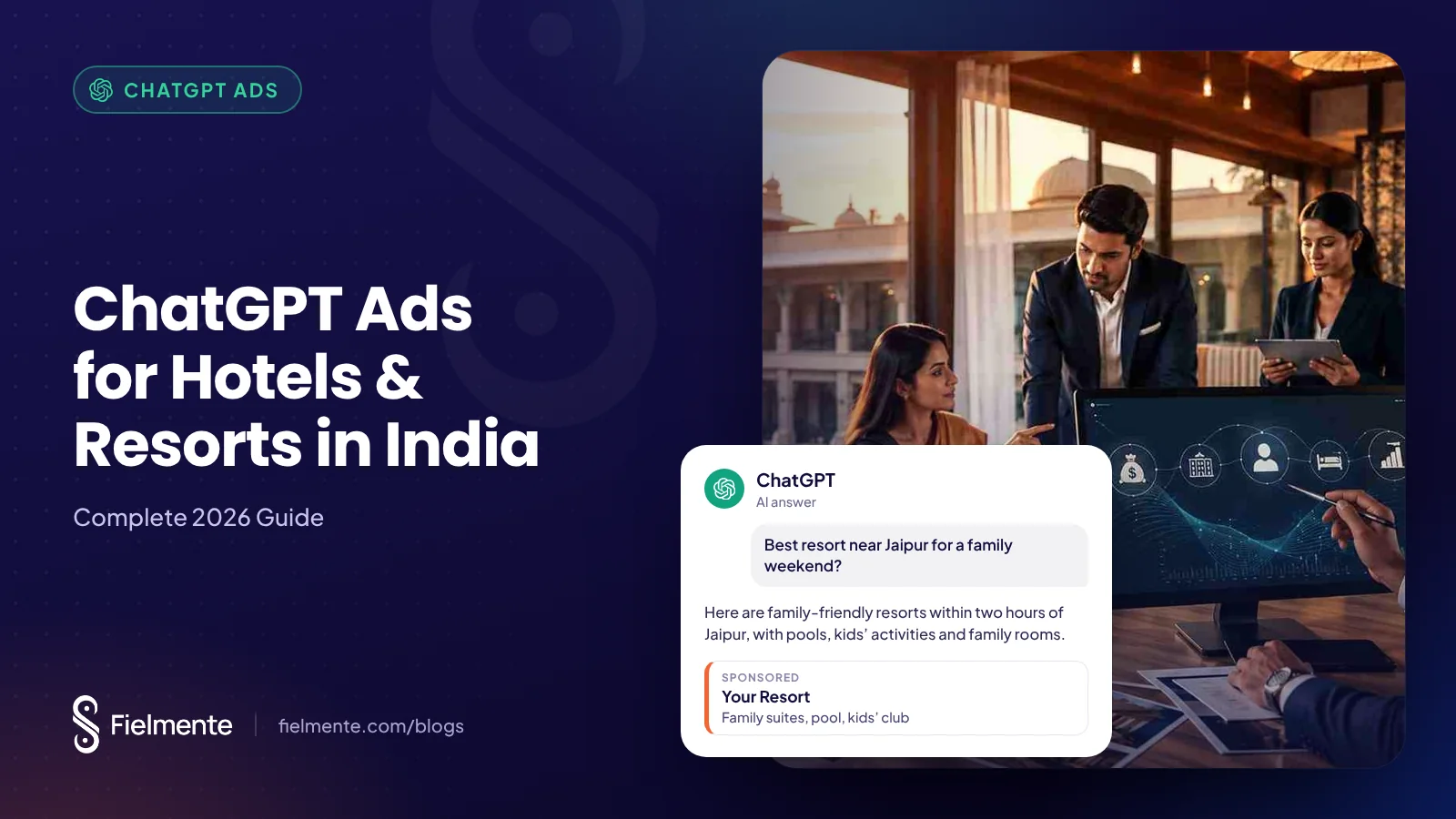
Indian businesses have been able to buy ChatGPT Ads through OpenAI's self-serve Ads Manager since 31 August 2026. For hotels and resorts this is a new way to appear while a traveller is planning a trip in ChatGPT, but the rules, minimums and measurement are different from Google or Meta. This guide sets out what is confirmed by OpenAI, what it costs to run a fair test and how we set one up for a property.
The platform changes quickly. Everything below was checked against OpenAI's announcements and help pages in November 2026; confirm the details inside Ads Manager before you spend.
How ChatGPT Ads reached India
| When | What happened |
|---|---|
| February 2026 | OpenAI began testing ads in the US, shown only to logged-in adults on the Free and Go plans. |
| May 2026 | A beta self-serve Ads Manager opened in the US, with a measurement pixel and a Conversions API for tracking. |
| 31 August 2026 | Self-serve buying opened to advertisers in India, Europe, the Middle East and North Africa. |
| October 2026 | Further countries were added, taking the total to 89. |
Who can advertise from India
You need a business whose legal entity is registered in a country on OpenAI's availability list, and India is on it. You open the account at ads.openai.com. Three settings are fixed when the account is created and cannot be changed later: the country, the billing currency and the time zone. Choose India, INR and IST if the hotel's revenue and accounts are in India; a group that bills from Dubai or Singapore should decide which entity owns the account before anyone signs up.
Larger advertisers can also contact OpenAI's ads team, and agencies can manage accounts on a client's behalf. Whoever builds the campaigns, keep the account in the hotel's own name so the history and data stay with the property.
Who sees the ads
- Plans: logged-in users on ChatGPT's Free and Go plans. People on Plus, Pro and Business plans do not see ads.
- Age: no ads for accounts identified as belonging to users under 18.
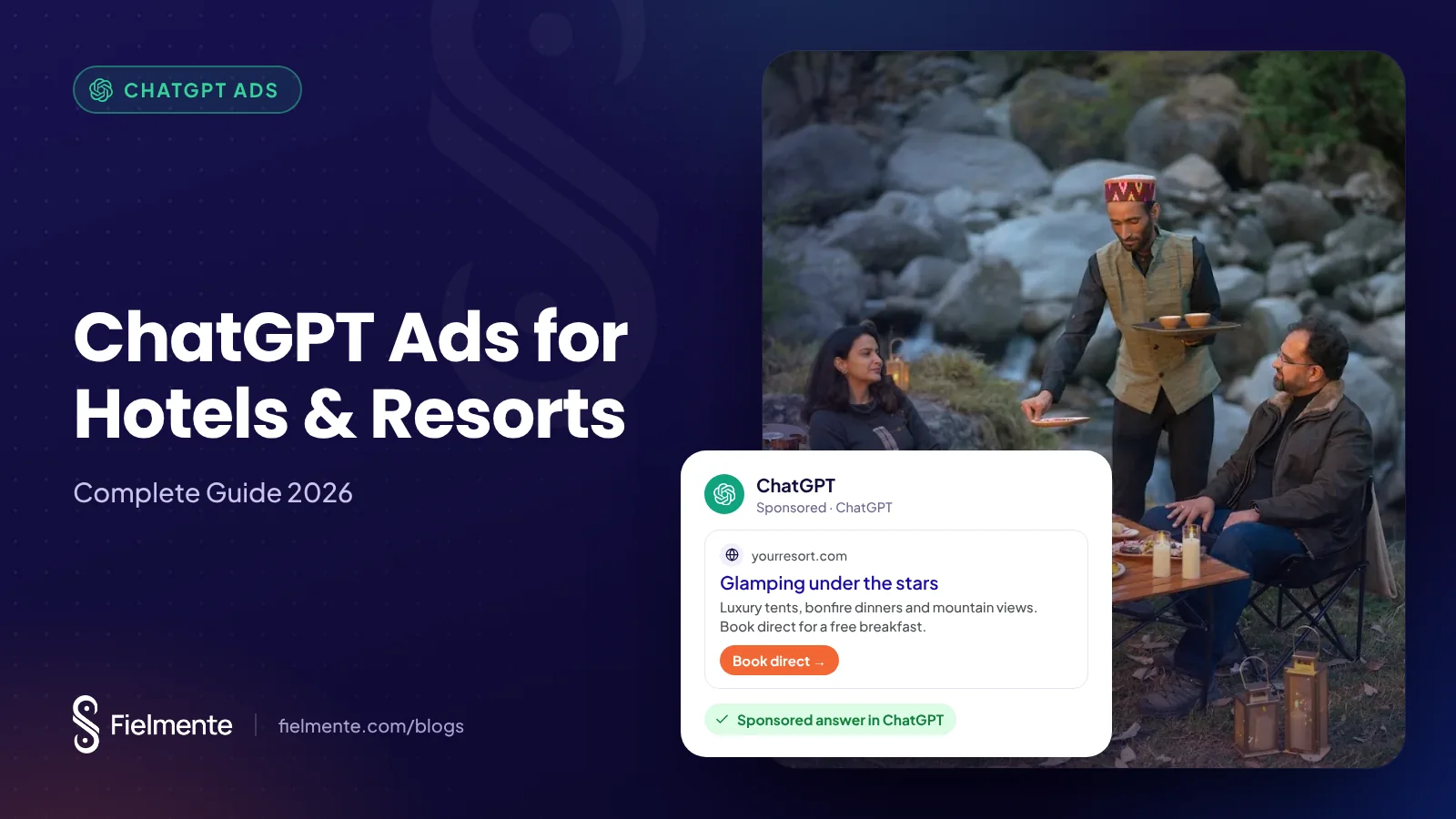
- Placement: ads appear below ChatGPT's answer, labelled as sponsored and kept separate from it. An advertiser cannot pay to change what ChatGPT says or where a hotel appears in the answer.
- Privacy: OpenAI says advertisers do not get access to users' conversations.
That audience matters for planning. Go is OpenAI's low-cost plan in India, so a large share of Indian ChatGPT users can see ads. Frequent travellers who pay for Plus will not, which is one reason ChatGPT Ads should sit alongside Google search rather than replace it.
What a hotel can and cannot promote
Travel, hospitality and local services are within OpenAI's allowed consumer categories. The restrictions that catch hospitality businesses are on health and finance: outside the US, OpenAI's ad policies generally prohibit financial and health services, and the case-by-case approvals available in the US do not extend to India.
For most hotels and resorts this is not an issue. For wellness retreats it is: advertise the stay, the setting, yoga sessions and the programme schedule, and leave out treatment claims, cures and medical outcomes. Ads and landing pages are both reviewed, so the claims on the page you link to count too.
What it costs
The minimum budget
For accounts billed in INR, the minimum daily budget is ₹725 per campaign. Budgets are averaged over a Sunday-to-Saturday week: a single day can spend up to twice the daily figure (₹1,450), and the week cannot exceed seven times it (₹5,075). So a campaign at the minimum costs up to about ₹21,750 in a 30-day month.
How you pay
Ads Manager offers three ways to buy:
- CPM, paying per 1,000 impressions, for reach and awareness.
- CPC, paying per valid click, for website visits.
- oCPC, still paying per click, but optimised towards clicks likely to lead to a conversion you track. You do not pay per booking.
For an independent hotel, CPC is the sensible start. Move to oCPC once the pixel or Conversions API is recording enquiries reliably, because the system needs those conversions to optimise.
Is ₹725 a day enough?
It is enough to start, but not always enough to learn. What you need is enough enquiries to judge the channel, and that depends on what a click costs you and how many visitors become enquiries. A worked example, with assumed numbers rather than OpenAI figures:
| Assumption | Value |
|---|---|
| Cost per click | ₹30 |
| Clicks per day at ₹725 | about 24 |
| Visitors who send an enquiry (call, WhatsApp or form) | 8% |
| Enquiries per day | about 2 |
| Days to reach 30 enquiries | about 16 |
Thirty enquiries is a reasonable first checkpoint for a single offer: enough to see the cost per enquiry and whether the enquiries are real. If your clicks cost more, or your landing page converts less, the test takes longer at the minimum. Splitting ₹725 across five ad groups spreads it too thinly to learn anything, so start with one or two offers.
How to set up a first campaign
- Create the account in the hotel's name, with India, INR and IST, and add a payment method.
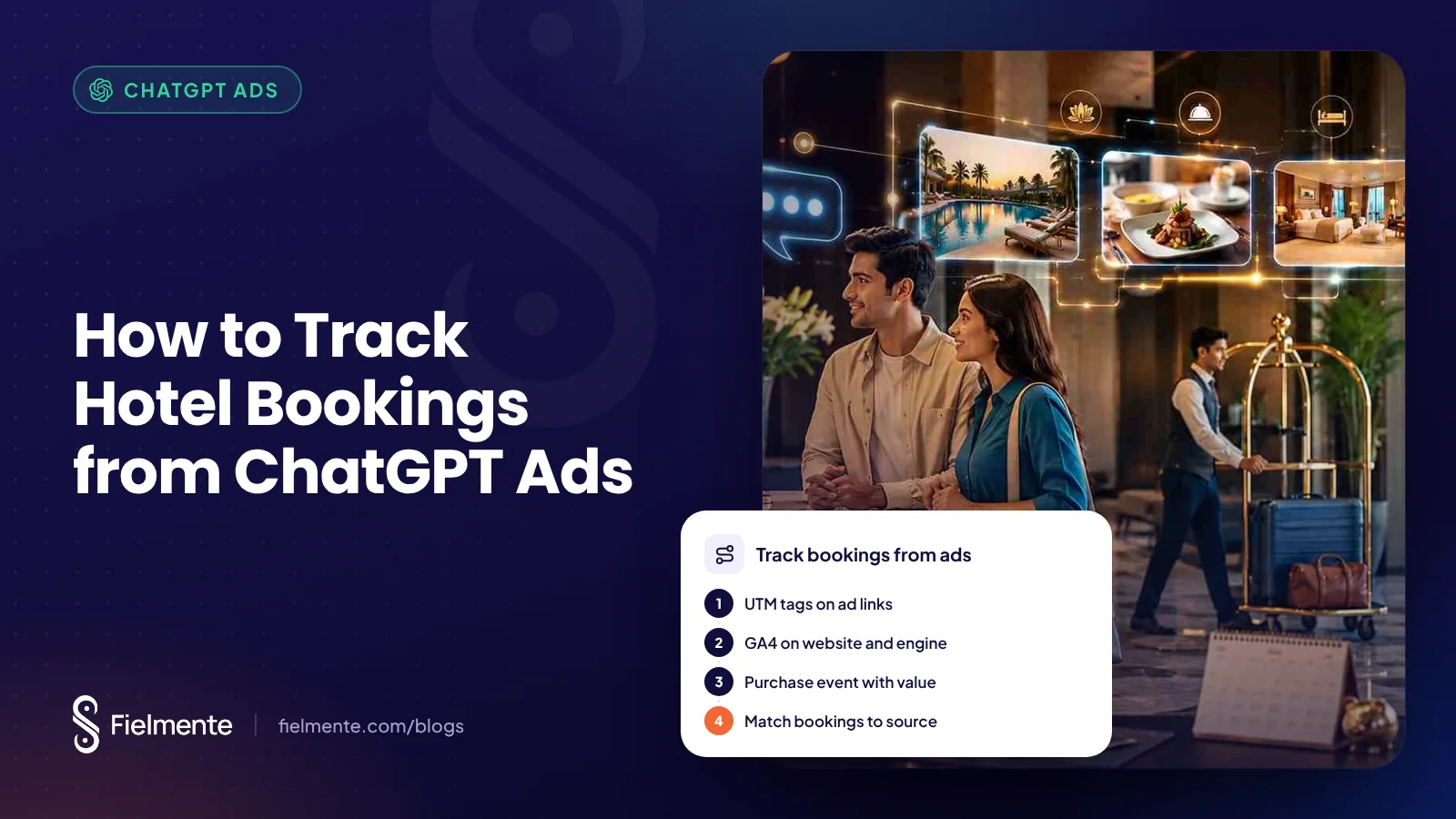
- Install tracking before any spend. Add OpenAI's measurement pixel to the landing pages and, if your booking engine or CRM can send events from its server, the Conversions API as well. Our tracking guide covers the setup, including WhatsApp and phone enquiries.
- Pick one or two offers with clear demand: a weekend package for guests driving from a nearby city, a wedding venue, a wellness programme with fixed dates. Each gets its own ad group.
- Write the ads. Each ad has your name and icon, a title, a short description, an image and the landing page. Add context hints that describe when the offer is useful (who is travelling, the occasion, the distance), not lists of keywords.
- Build a landing page per offer, with the "from" price, what is included, dates and a WhatsApp button. Sending ad traffic to the home page is the most common reason ChatGPT clicks do not turn into enquiries.
- Start on CPC at a budget that reaches about 30 enquiries in two to three weeks, then review cost per enquiry and the enquiries themselves before changing anything.
Our main guide to ChatGPT Ads for hotels goes further into campaign structure, context hints and ad copy for different property types.
Should a small hotel try it?
Try it if three things are already in place: a way to book or enquire directly that works well on a phone, someone who replies to WhatsApp within minutes, and Google search ads for your own name and town that are already producing enquiries. If those are missing, money spent on ChatGPT Ads will mostly show you the same leaks your other channels have.
We apply the same order on every new channel. In our Google Ads work for Naturoville Wellness Resort, cost per enquiry fell from ₹1,543 to ₹177 on nearly the same budget, and most of that came from fixing tracking and the path from ad to enquiry, not from the ads themselves (case study). ChatGPT Ads will reward the same groundwork.
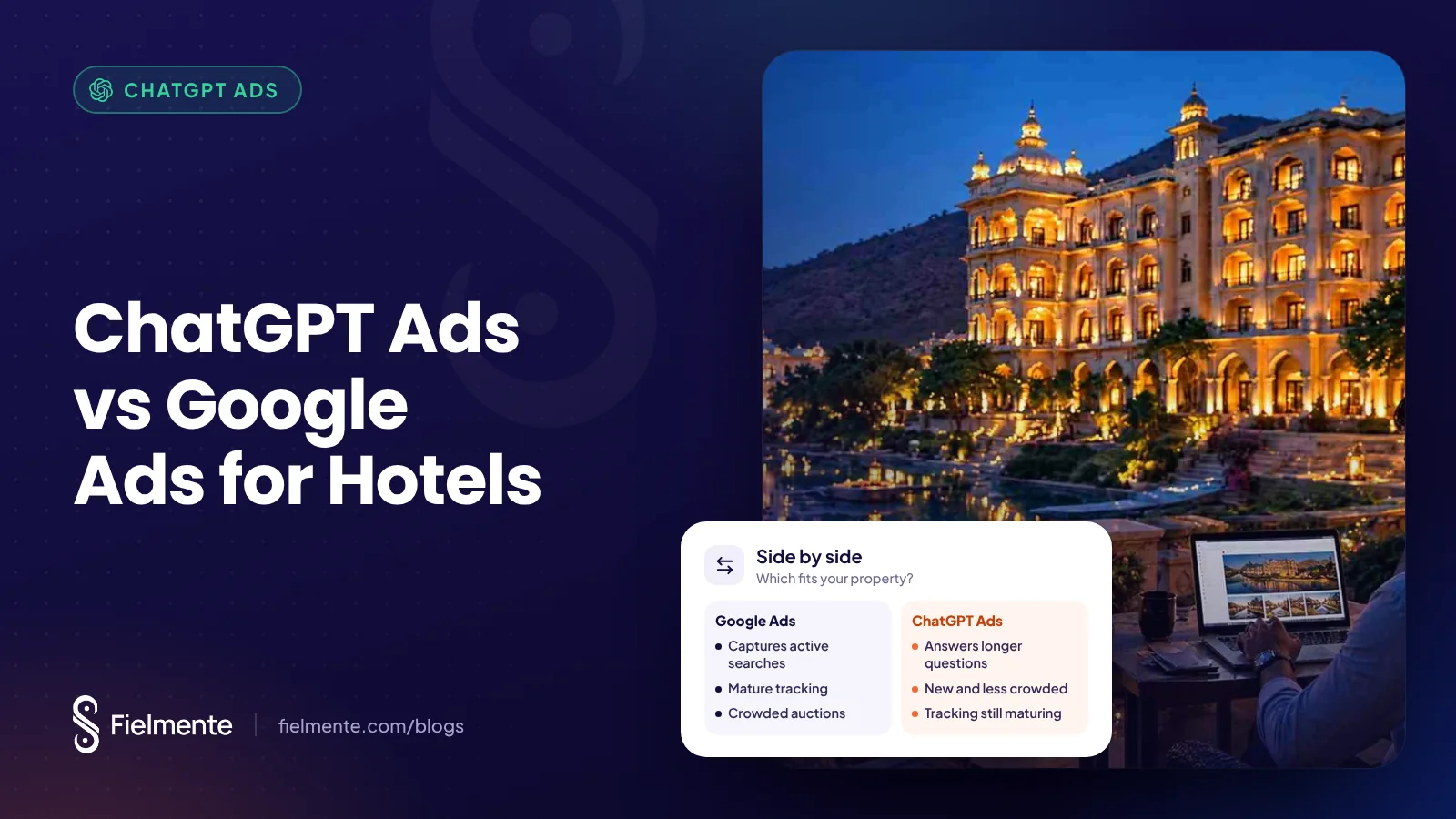
For how ChatGPT Ads compare with Google, Meta, metasearch and OTA promotions, see ChatGPT Ads vs Google Ads and other channels.
Questions hotels ask
Can people on ChatGPT Plus see my hotel's ads?
No. Ads are shown only to logged-in adults on the Free and Go plans.
Can I pay only when someone books?
No. You pay per click (CPC and oCPC) or per thousand impressions (CPM). oCPC aims for clicks that are likely to convert, but billing stays per click.
Can a wellness retreat advertise?
Yes, for the stay and programme, but not for health or medical claims, which OpenAI's policy generally prohibits outside the US. Keep the ad and the landing page free of treatment and cure language.
Do we need an agency?
No. Ads Manager is self-serve. An agency helps if you lack time for tracking, landing pages and weekly reviews; if you use one, keep the account in your own name.
Sources
Want this working for your property?
Get a free 15-minute marketing audit from the Fielmente team.